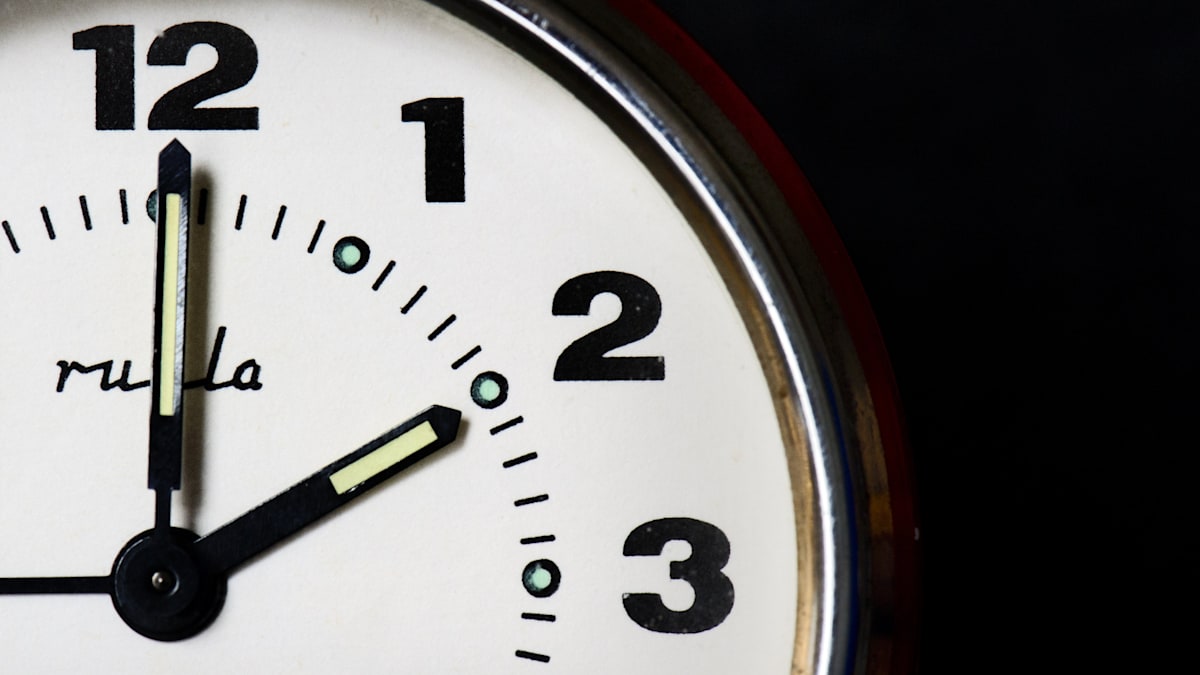
As the days begin to lengthen and the promise of spring approaches, a familiar ritual looms on the horizon for millions across Germany and the wider European Union: the bi-annual time change. For 2026, the question of when to 'uhr umstellen 2026' (change the clock) once again takes center stage. While many still hope for the abolition of this tradition, the reality is that for the foreseeable future, we'll continue to adjust our clocks twice a year.
One particular aspect of the upcoming 2026 shift to Daylight Saving Time (Summerzeit) often sparks confusion: the perception that it arrives "earlier" than usual. This article will demystify this notion, provide all the essential dates, offer practical advice, and help you navigate the time change with ease, ensuring you're perfectly aligned with the correct time.
Navigating the 2026 Time Change: Key Dates for Your Calendar
To avoid any last-minute surprises or missed appointments, it's crucial to mark down the exact dates for 2026. The rhythm of time adjustment follows a predictable pattern dictated by EU regulations, ensuring synchronicity across member states and many neighboring countries.
Spring Forward: The Beginning of Summer Time
- Date: Sunday, March 29, 2026
- Mechanism: In the early hours of Sunday morning, specifically at 2:00 AM Central European Time (MEZ), clocks will be advanced by one hour to 3:00 AM Central European Summer Time (MESZ).
- Impact: This means we lose an hour of sleep on this particular night. However, the trade-off is more daylight in the evenings, pushing sunsets later and allowing for more enjoyment of outdoor activities after work or school. It truly signals the start of longer, brighter evenings.
Fall Back: The Return of Standard Time (Winter Time)
- Date: Sunday, October 25, 2026
- Mechanism: Similarly, in the autumn, clocks will be set back by one hour. At 3:00 AM MESZ, they will revert to 2:00 AM MEZ.
- Impact: This shift grants us an extra hour of sleep, a welcome bonus for many. While evenings will become darker earlier, mornings will see the sunrise earlier, potentially aligning better with daily routines. This marks the official return of what is often referred to as 'Winter Time' or, more accurately, 'Normal Time'.
Knowing these dates for 'uhr umstellen 2026' well in advance allows for careful planning, whether it's adjusting your sleep schedule, making travel arrangements, or simply ensuring your home appliances are correctly set. For a comprehensive overview, you might also find Spring Forward, Fall Back: 2026 Time Change Dates & Rules helpful.
Debunking the "Earlier" Date Myth: Why March 29th Isn't a Rule Change
Every few years, as the calendar cycles, discussions resurface about the time change seemingly "arriving earlier." This sentiment is particularly prevalent concerning the switch to Daylight Saving Time in March 2026, which falls on the 29th. To understand why this perception is misleading, we need to clarify the underlying rule governing the time change.
The Consistent Rule: The Last Sunday
The confusion stems from a simple misunderstanding: people often remember specific dates from previous years rather than the consistent regulatory framework. The fundamental rule, enshrined in an EU directive since 1996, is unwavering:
- Daylight Saving Time (Summer Time) begins on the last Sunday of March.
- Standard Time (Winter Time) begins on the last Sunday of October.
This rule applies universally across the EU, Switzerland, and several other European nations, all synchronizing their clocks at 01:00 UTC (Coordinated Universal Time) to maintain consistency.
Illustrating the Calendar Fluctuation
The reason March 29th feels "earlier" is purely a function of the calendar. The last Sunday of March doesn't always fall on the same numerical date. Let's look at recent and upcoming years:
- 2025: The last Sunday in March was the 30th.
- 2026: The last Sunday in March is the 29th. (Perceived as "earlier" than 2025).
- 2027: The last Sunday in March will be the 28th. (Likely to be perceived as "even earlier").
- 2030: The last Sunday in March will fall on the 31st, making it one of the "latest" possible dates for the switch.
As you can see, the date naturally shifts within the last seven days of March. While the calendar date varies, the underlying principle of the "last Sunday" remains constant. So, when you hear whispers of an "earlier" time change for 'uhr umstellen 2026', rest assured that the system itself has not been altered.
Mastering the Clock Shift: Practical Tips and Memorable Mnemonics
Even for seasoned time-change veterans, the shift can sometimes lead to momentary confusion. Fortunately, a combination of practical strategies and handy mnemonic devices can make the transition smooth and stress-free.
Clever Mnemonics to Remember the Direction
Remembering whether to move clocks forward or backward can be tricky. Here are some popular and effective memory aids:
- "Spring Forward, Fall Back": This is arguably the most common and intuitive English mnemonic. In the spring, you literally 'spring' your clocks forward an hour. In the autumn, you 'fall' back an hour.
- The Garden Furniture Rule (Gartenmöbel-Regel): This German-centric tip is wonderfully illustrative. In the spring (Frühling), you put your garden furniture out ('vor' die Tür) – just like you set your clock forward. In the autumn (Herbst), you put your garden furniture back ('zurück') into storage – just like you set your clock back.
- The 2-3-2 Rule: This simple numerical rule refers to the exact hour changes. In spring, the clock jumps from 2 AM to 3 AM. In autumn, it drops from 3 AM back to 2 AM.
- The Temperature Rule: Imagine temperatures. In summer, temperatures are generally 'plus' (+), so you add an hour. In winter, temperatures are 'minus' (-), so you subtract an hour.
Practical Tips for a Smooth Transition
Beyond remembering the direction, here's how to ensure a seamless shift for 'uhr umstellen 2026':
- Automated Devices are Your Friends: Most smartphones, computers, smartwatches, and digital TV boxes automatically adjust. Trust these devices, but a quick check on Sunday morning can offer peace of mind. Ensure your devices are set to automatically update their time zone.
- Manual Adjustments for Analog Clocks: Don't forget wall clocks, oven clocks, car clocks, and older bedside alarms. It's often easiest to adjust these on Saturday evening before bed, or first thing Sunday morning. For the spring forward, setting them ahead before bed means you wake up to the correct time.
- Pre-Adjust Your Sleep Schedule: For the spring forward, losing an hour of sleep can impact sensitive individuals. Try going to bed 15-30 minutes earlier in the few days leading up to March 29th to gradually ease your body into the new schedule. Conversely, for the fall back, enjoy the extra hour!
- Mind Your Appointments: Double-check any early Sunday morning appointments or travel plans on March 29th to avoid being an hour late. While less critical for the fall back, it's still good practice to be aware.
- Consider Children and Pets: Babies, young children, and even pets often operate on internal clocks. Their routines might be slightly disrupted for a few days. Gradually shifting their bedtimes or feeding times by 10-15 minutes in the days leading up to the change can help.
- Verify Important Timetables: If you rely on public transport or have specific work schedules for Sunday, March 29th, or Sunday, October 25th, always verify timings, as some schedules might be temporarily affected.
The Ongoing Debate: Why Time Changes Persist in Europe
Despite years of passionate debate and surveys showing overwhelming public disapproval, the practice of changing clocks twice a year persists across the EU. The discussion intensified around 2018 when the European Commission proposed ending the time change, but progress stalled. Here's a quick look at why this tradition, originally conceived to save energy, continues:
- Lack of Consensus: While many citizens want to abolish the change, there's no widespread agreement on which time zone to permanently adopt. Some countries prefer permanent Daylight Saving Time (more evening light), while others advocate for permanent Standard Time (more morning light). This divergence makes a unified EU decision challenging.
- Internal Market Concerns: A patchwork of different time zones across neighboring EU countries could complicate cross-border trade, transport, and communication within the single market.
- Coordination with Non-EU Countries: Many non-EU European countries, including Switzerland and Norway, also observe the time change, often aligning with the EU for practical reasons. Any EU decision would have ripple effects.
So, for 2026, and likely beyond, understanding how to 'uhr umstellen 2026' remains a necessary part of European life.
In conclusion, while the debate around the utility of the bi-annual time change continues, for 2026, the clocks will indeed shift. The switch to Daylight Saving Time on Sunday, March 29th, will shorten one night but usher in longer, brighter evenings. The return to Standard Time on Sunday, October 25th, will grant an extra hour of sleep. The perceived "earliness" of the March date is merely a calendrical quirk, not a change in the established rule of the last Sunday. By arming yourself with the correct dates, understanding the mechanisms, and utilizing practical tips and memorable mnemonics, you can navigate the 'uhr umstellen 2026' with confidence and minimal disruption.